

The CTO’s Comprehension Debt | Exec Engineering #197
Also: why trust beats any decision framework, how meeting interruptions reveal more about your culture than any engagement survey, and the feedback technique that works when nothing else has.

Hey👋
Thanks for reading Exec Engineering, a weekly digest for the busy tech executive.
I hope this edition brings you value.
The Digest
The Last Technical Interview (Steve Yegge / Medium)
Technical interviews are a simulation. You spend a few hours watching someone perform, then make a years-long bet on it. Steve Yegge’s alternative, the “campfire model”, is already gaining traction in SF. Bring candidates in for a few paid days on a real codebase with a real team. The work counts twice: signal for you, and a portable record of verified output for them.
The Slide (Michael Lopp / Rands in Repose)
The author has a technique for the feedback that never lands. Instead of repeating yourself, you slide in with a story about the time you struggled with the exact same thing. Discomfort recognizes discomfort in a way that direct advice never does.
The End of the People Manager (Mirek Stanek / Practical Engineering Management)
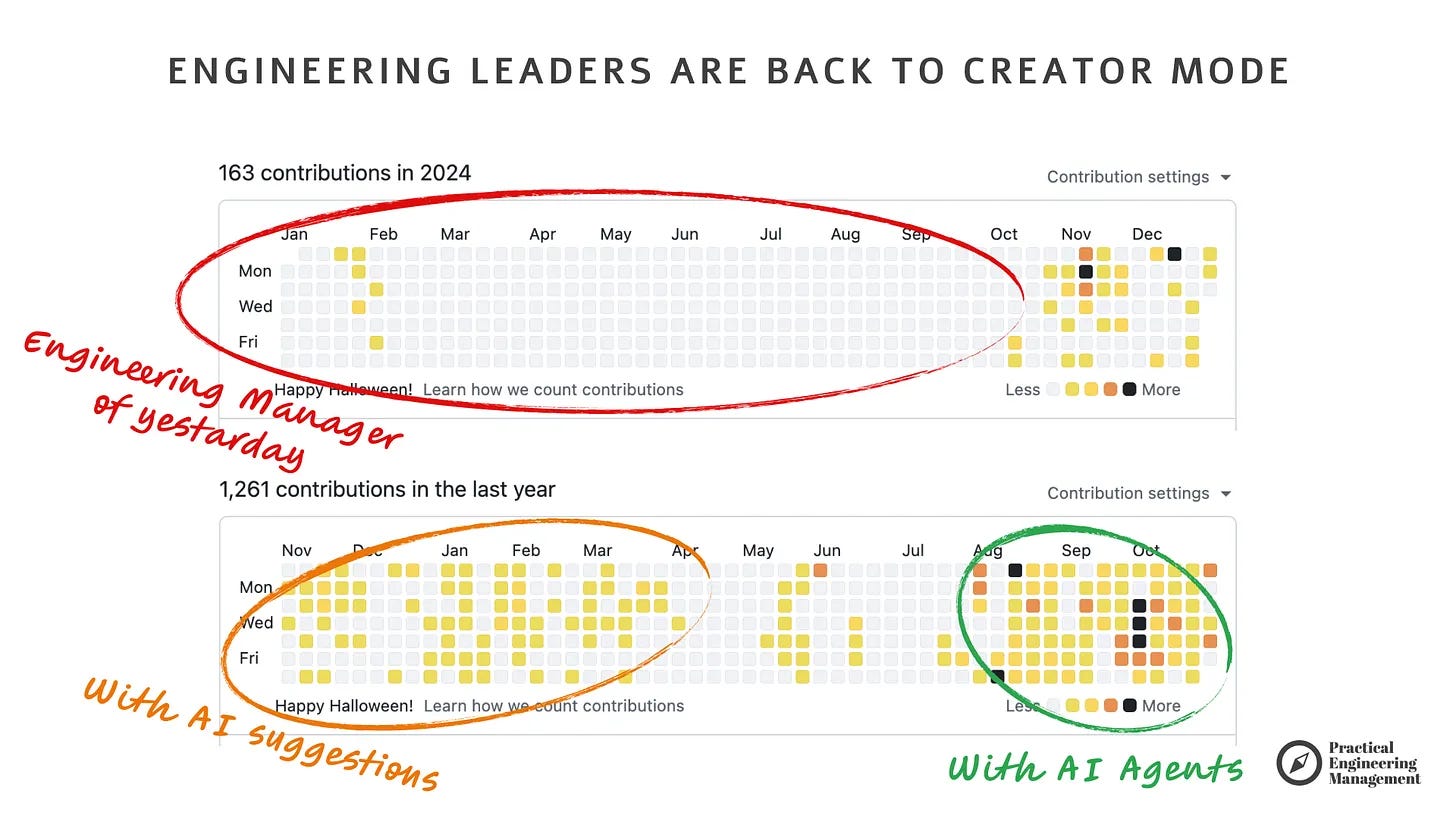
For a decade, stepping away from the codebase was the price of leadership. AI just eliminated that excuse. The leaders who survive next will be the ones who stay close enough to the work to see where the product breaks, where users get confused, and where the system quietly fails.
The CTO’s Comprehension Debt (Etienne de Bruin / The CTO Substack)
Comprehension debt is what happens when you forward an artifact you never actually absorbed. AI summarization works fine for data. It breaks down the moment another human has to act on what you sent and needs your actual judgment, not a model’s best guess at what you might have thought.
Trust comes before any decision framework (Simone D’Amico / Lead Through Mistakes)
When people escalate decisions they clearly own, the instinct is to wonder about competence. Rarely the case. Psychological safety shapes how freely people can see the options in front of them, and rebuilding it starts with one thing: stop giving the right answer, and give them the context and permission to find it themselves.
What Interruptions Reveal About Company Culture (William Degbey, Benjamin Laker, Baniyelme Zoogah, Sanjay Kumar Singh and Ghulam Murtaza / HBR)
A study of 164 leaders found that the people being interrupted in meetings drew a very different conclusion than the people doing the interrupting. They learned whose voice carried weight in the room, adjusted how they spoke to avoid being cut off, and eventually stopped sharing ideas that were not fully formed. That behavioral shift is what turns a meeting habit into a culture.
Adapting to AI: Adapting Organizations (Colin Breck)
AI scales what already exists in an organization. The companies that will pull ahead are the ones that already have tight feedback loops, end-to-end ownership, and engineers who think across the whole system. For everyone else, shipping more code faster is not an advantage, but a liability that compounds.
How can engineering leaders calculate the return on their AI investments? (Lizzie Matusov / Research-Driven Engineering Leadership)
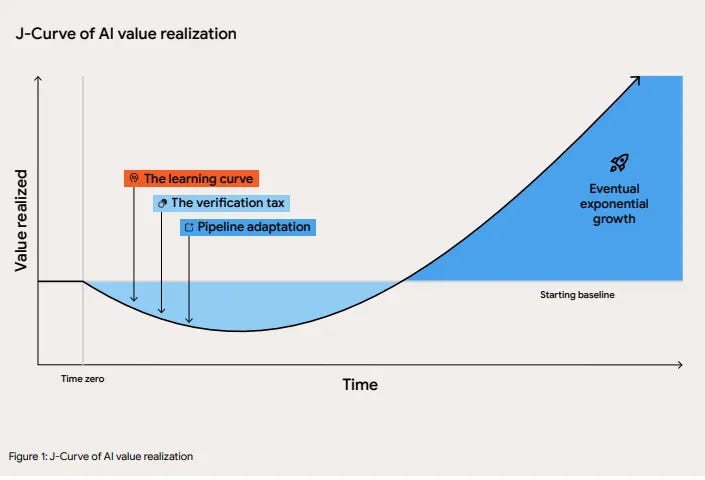
DORA put a number on AI ROI in engineering: 39% in year one. But that number only holds if you budget for a 15% productivity drop in the first three months. Most initiatives get killed during that window because leadership reads a temporary dip as failure, when it is actually just the cost of learning.
Dialog
Allen Cheung, former SVP of Engineering at ujet.cx, shares why engineering output depends less on hiring “A players” and more on building environments where average engineers can consistently do great work.
He explains why AI adoption is pushing teams to finally invest in CI/CD, testing, and review discipline, how hiring for complementary strengths only works when teams have the humility to embrace different work styles, and why high team satisfaction can still hide mediocre business performance.
Check it out here:

More reads
The Minimill of AI (Tomasz Tunguz)
A pond of interesting problems (David Heinemeier Hansson)
AI enthusiasts are in a race against time, AI skeptics are in a race against entropy (Charity Majors)
The Google Capital Company (Ben Thompson)
Do Things You’ll Love Yourself For (David Cain)
This digest is supported by Gemography.

Support your engineering team with remote high-ownership engineers from Africa and LatAm, on demand. Meet precise matches for your stack and culture under 48h.
About Exec Engineering
I’m Yassine 👋 I spend a big chunk of my time digging into engineering management and talent acquisition, especially where the two overlap. I share the most interesting resources I come across in this newsletter, all curated by hand.